The Dochlaggie Pomeranians Story: More Than 50 Years of Breeding, Showing and Devotion
Pomeranians have shaped almost every part of Denise Leo’s life.
What began as a childhood love for an intelligent and spirited little dog developed into Dochlaggie Pomeranians. Denise established the Dochlaggie prefix in 1975 and has now devoted more than 50 years to the breed.
During those years, she has bred, owned and exhibited more than 100 champions. She has travelled internationally to study Pomeranians, introduced valuable bloodlines to Australia and judged the breed at home and overseas.
Her contribution extends far beyond breeding and showing. Denise has written books, developed educational websites, volunteered for dog clubs and started Pomeranian picnics and meet-ups in Australia.
The Dochlaggie story is not simply a record of champion titles, imported dogs and major show wins. It records a lifetime dedicated to understanding, improving and preserving the Pomeranian.
A Family Connection to Pomeranians
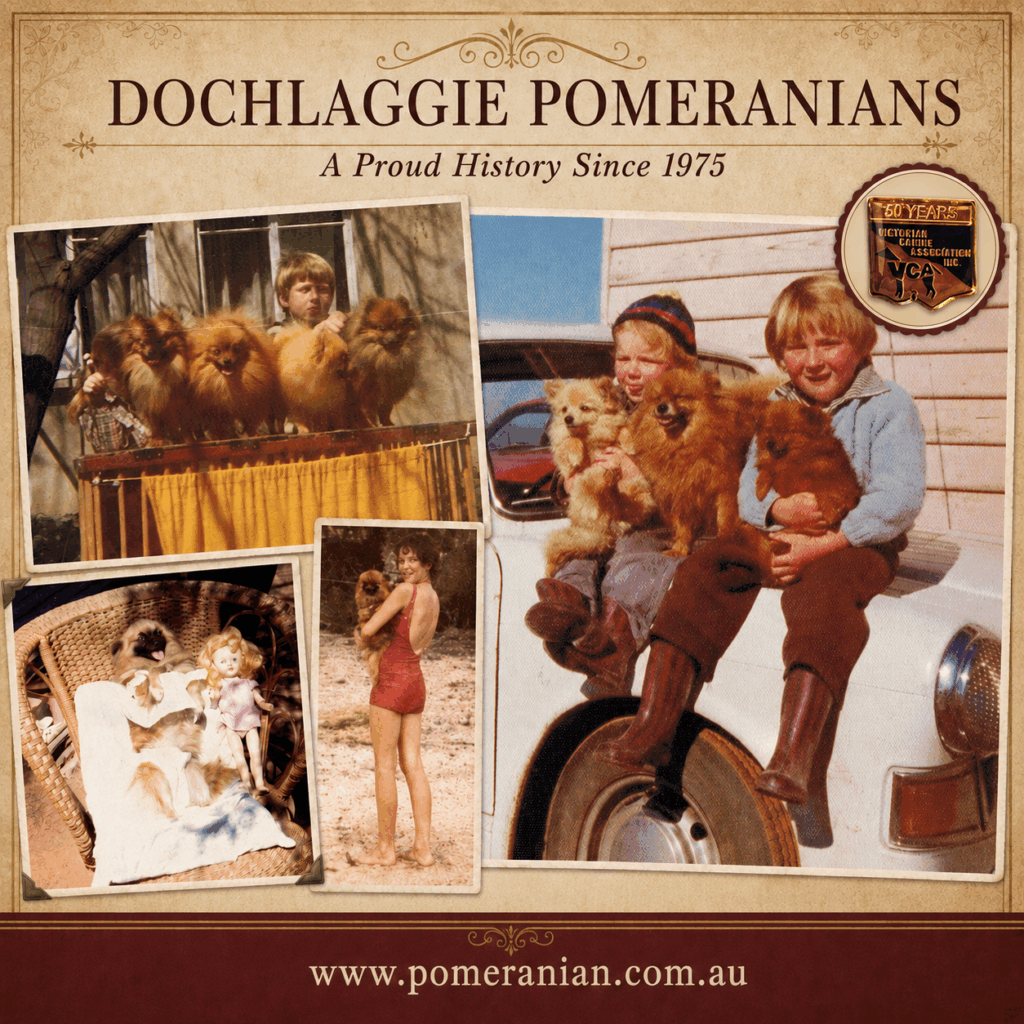
Pomeranians formed part of Denise’s family history long before she established Dochlaggie. Several of her aunts had an involvement with the breed.
When Denise was nine years old, her family welcomed a Pomeranian named Bing. Her mum chose the name in honour of her favourite singer.
Bing became a much-loved family dog. He also began Denise’s lifelong love of Pomeranians.
That childhood attachment gradually developed into a desire to learn everything possible about the breed. Pedigrees, breed history, construction and type all became important areas of study.
Pomeranians were never simply fashionable little pets to Denise. She admired their intelligence, confidence and lively personalities.
A good Pomeranian may be small, but there is nothing insignificant about the breed. The Pomeranian possesses presence, character and enormous self-belief.
This early fascination eventually became a lifelong ambition.
Establishing Dochlaggie Pomeranians
Denise joined Dogs Victoria, then known as the Kennel Control Council, in February 1975. She established the Dochlaggie prefix during the same year.
From the beginning, the breeding program focused on unmistakable Pomeranian breed type. Correct construction, sound movement, beautiful coats and confident temperaments also remained essential.
The Australian dog scene looked very different in 1975.
Breeders had no internet, social media or online pedigree databases. They could not instantly contact breeders around the world or view photographs of their dogs.
Most breeders maintained handwritten breeding books. These books contained pedigrees, mating records, litter details and personal notes about individual dogs.
Breeders gained knowledge through experience, books, dog magazines, show catalogues and conversations with other breeders.
Australia’s geographical isolation created additional challenges. Quarantine restrictions limited access to international bloodlines.
Australian breeders needed to work carefully with the Pomeranians already available in the country. Pedigree knowledge and honest assessment played a vital role.
Show presentation also looked different. Exhibitors generally presented Pomeranians in profuse, almost natural coats. They used far less trimming and sculpting than exhibitors commonly use today.
Dogs Victoria magazines often carried advertisements for very small males standing at stud. Breeders regularly promoted three-pound males. However, many Pomeranians in the show ring were larger than the tiny dogs featured in these advertisements.
These early years laid the foundations for the future of Dochlaggie Pomeranians.
Learning Through Experience
There is no shortcut to becoming an experienced breeder.
Every litter teaches a breeder something. So does every pedigree, show result, success and disappointment.
Books, seminars, health testing and DNA technology all provide valuable information. None can replace practical experience.
A breeder must learn how puppies develop. Young Pomeranians can change considerably as they grow.
Experience helps distinguish a temporary stage from a permanent weakness. It also teaches breeders which qualities different bloodlines may pass to their descendants.
Even the most carefully planned litter may not produce the expected result. Breeding animals will always involve some uncertainty.
A responsible breeder must make every decision honestly and place the welfare of the dogs first.
Denise learned to look beyond a dog’s immediate appearance. She studied its ancestors, siblings and previous progeny.
Knowing the names printed on a pedigree is not enough. A breeder should know what those dogs looked like, how they moved and what they produced.
This knowledge helped Denise develop a recognisable family of Dochlaggie Pomeranians.
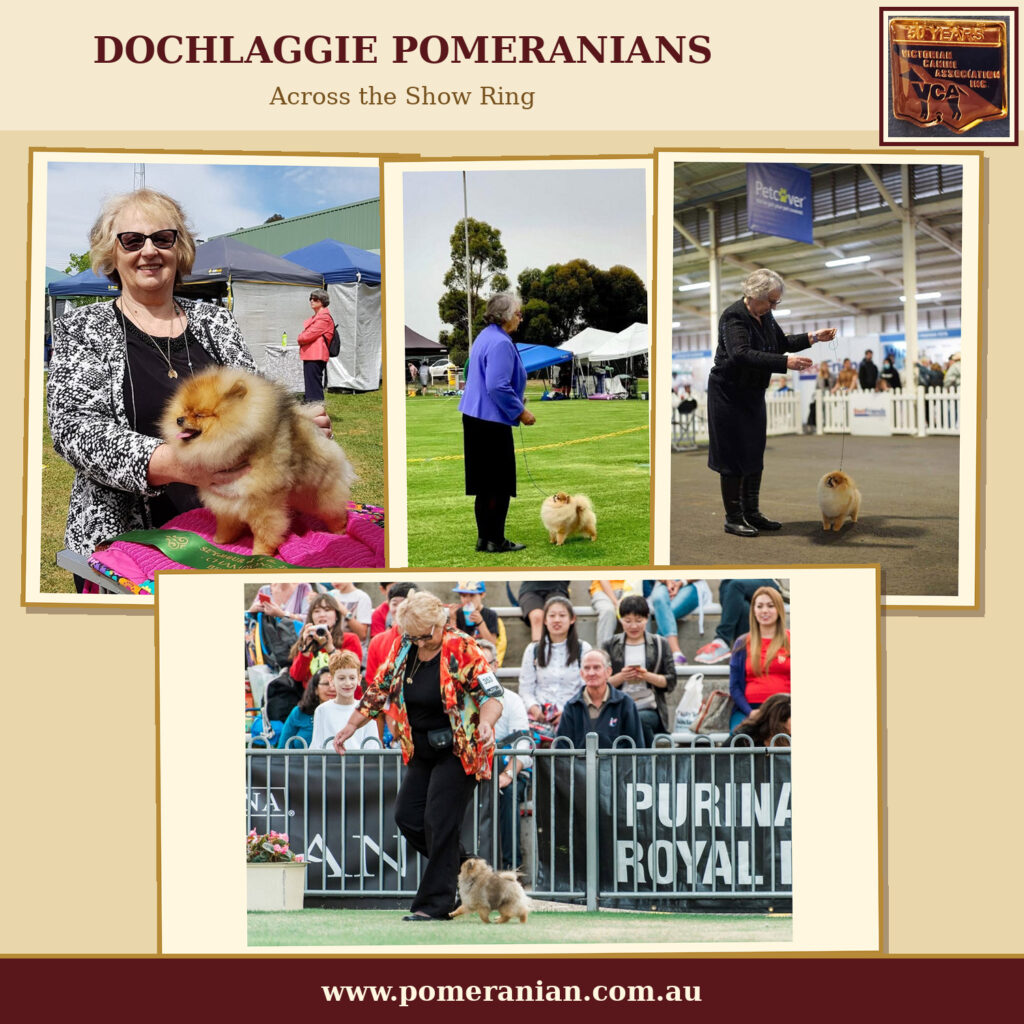
Understanding Correct Construction and Breed Type
A successful breeder must understand correct construction.
A beautiful head, profuse coat or glamorous show presentation may attract immediate attention. These features cannot replace a sound physical structure.
A Pomeranian must move freely and comfortably.
However, while correct construction remains extremely important, without breed type there is nothing.
A sound, well-moving little dog is not automatically a correct Pomeranian. It must also possess the characteristics that make it unmistakably Pomeranian.
The Dogs Australia breed standard describes a compact, short-coupled dog that is well knit in frame. The Pomeranian should show great intelligence in expression, with activity and buoyancy in deportment.
The breed should be sound, vivacious and dainty. Its temperament should be extroverted, lively and intelligent.
Many characteristics combine to create breed type.
The Pomeranian should have a compact body and short back. Its high-set tail should turn over the back and lie flat and straight.
The breed should carry a profuse double coat. The ears should remain relatively small and perfectly erect.
The head and nose should be foxy in outline. The eyes should appear bright, dark and slightly oval. They should display great intelligence.
No single feature creates breed type. The complete combination matters.
Correct construction holds equal importance. The neck should remain rather short and sit well into clean, well-laid-back shoulders.
The forelegs should be perfectly straight. Their length should remain in proportion to the size of the dog.
The body should appear compact and well ribbed. The barrel should remain well rounded. The chest should have suitable depth without becoming too wide.
The hindlegs should be fine-boned. They should not appear cow-hocked or too widely placed. The hindquarters should have medium angulation.
The feet should remain small, compact and cat-like.
When a Pomeranian strain begins to deteriorate, two of the first qualities often lost are the head coat and the coat on the legs. The amount of coat on a Pomeranian’s head can dramatically change its appearance. A dense head coat can make the muzzle appear shorter, the stop deeper and the ears smaller. A lack of head coat can make the muzzle appear longer and leave the ears looking larger and more exposed.
This means more than an individual dog simply lacking leg and head coat. It describes the gradual loss of distinctive breed characteristics within a family of dogs.
These changes can provide an early warning that the strain is losing breed type. An experienced breeder must recognise and correct them before they become established in future generations.
Correct construction allows the Pomeranian to move freely. The breed standard describes its movement as free, brisk and buoyant.
Movement often exposes structural weaknesses that a profuse coat may hide.
A skilled groomer can create the appearance of a balanced outline. Trimming cannot alter the skeleton beneath the coat.
Breeders must examine Pomeranians with their hands as well as their eyes. They need to feel the shoulders, ribcage, back and tail set. They must also assess the relationship between the front and rear assemblies.
Correct construction affects more than success in the show ring. It also affects the dog’s comfort, mobility and quality of life.
The challenge is to preserve both soundness and breed type.
The objective must always remain the complete Pomeranian. It should appear compact and well knit, with sound construction and free, buoyant movement.
It should possess an extroverted, intelligent temperament. Above all, it must look unmistakably like a Pomeranian.
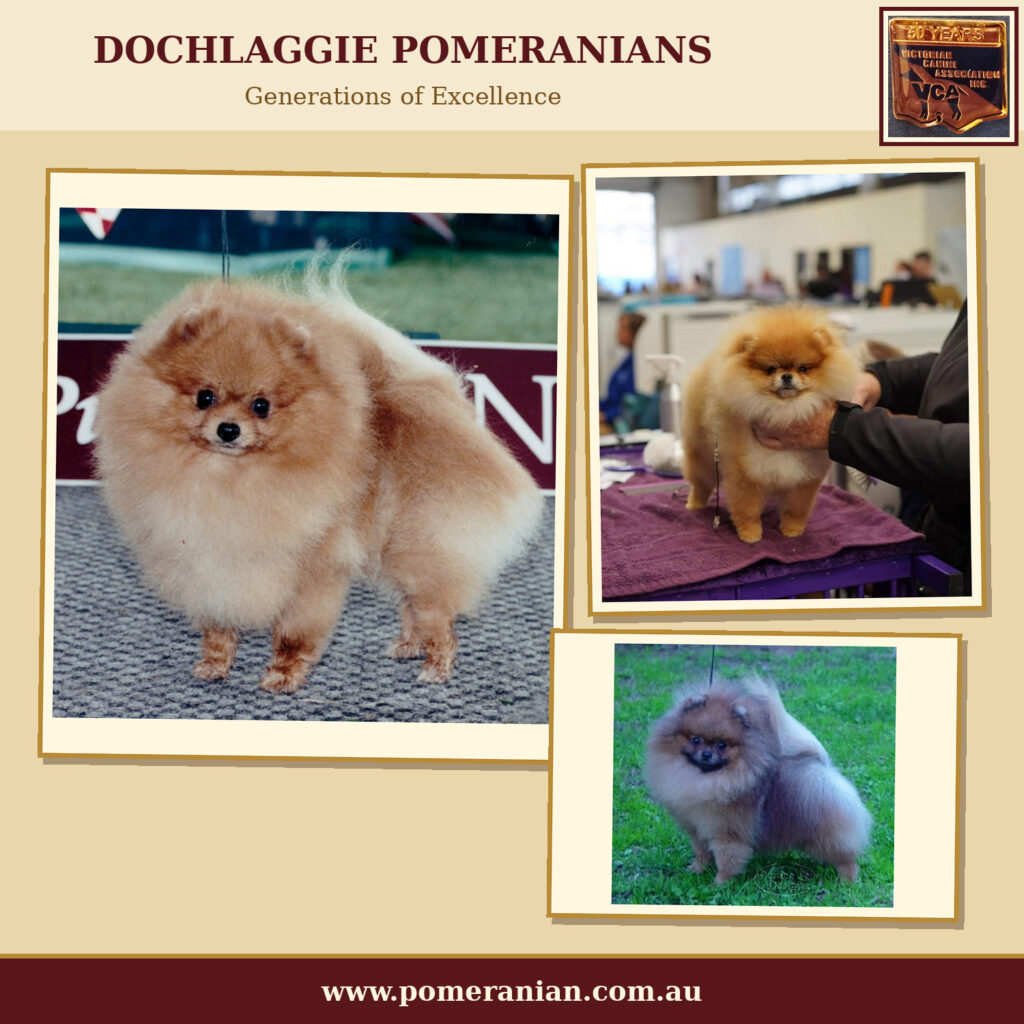
Preservation Breeding, Not Fashionable Extremes
Dochlaggie operates as a preservation breeding program.
The program respects the breed standard and the history behind it. It aims to protect the qualities that generations of breeders worked to establish.
Denise does not support the promotion of so-called “teacup Pomeranians.” The Pomeranian is already a Toy breed.
Breeding for extreme tininess can place marketing ahead of health, soundness and quality of life.
Responsible breeding does not follow every new trend. Nor does it focus on producing a dog that looks fashionable in a social media photograph.
A breeder must consider the dog’s entire life. Each breeding decision may also influence several future generations.
Health must remain part of the complete picture. Ribbons, titles and photographs cannot measure the full success of a breeding program.
The dogs should enjoy happy and active lives.
A preservation breeder should leave the breed at least as strong as they found it. Wherever possible, they should improve it.
Travelling the World to Study the Pomeranian
Denise has never confined her education as a breeder to Australia.
She has travelled extensively to attend major dog shows, meet leading breeders and study Pomeranians in different parts of the world.
Australia’s isolation and quarantine requirements create significant challenges. Importing a dog requires careful planning, extensive research and considerable expense.
Australian breeders cannot afford to study only the dogs in front of them. They must understand the larger international picture.
Denise wanted to see how the Pomeranian was developing worldwide. She studied which bloodlines produced consistently and which qualities breeders were strengthening.
She also watched for trends that could eventually harm the breed.
Photographs and pedigrees provide useful information, but they never tell the complete story.
A photograph cannot accurately show movement. It does not allow a breeder to feel the texture of the coat or assess the structure beneath it.
Photographs can also hide a dog’s true size, proportions and temperament. Grooming, posing and editing may create a misleading impression.
Seeing the dogs in person provides a much clearer understanding.
Overseas shows also allowed Denise to compare different interpretations of the Pomeranian breed standard. Breeders in different countries may place greater emphasis on particular characteristics.
Grooming and presentation styles also vary. Some developments may benefit the breed. Others require caution.
Breeding decisions can influence a family of dogs for generations. A breeder must look beyond immediate show results and consider the future direction of the breed.
International travel and relationships with overseas breeders helped Denise make more informed decisions for Dochlaggie.
A fashionable appearance or an impressive list of titles has never provided enough reason to import a dog. Each new bloodline needed to complement the existing Dochlaggie family and offer something valuable to future generations.
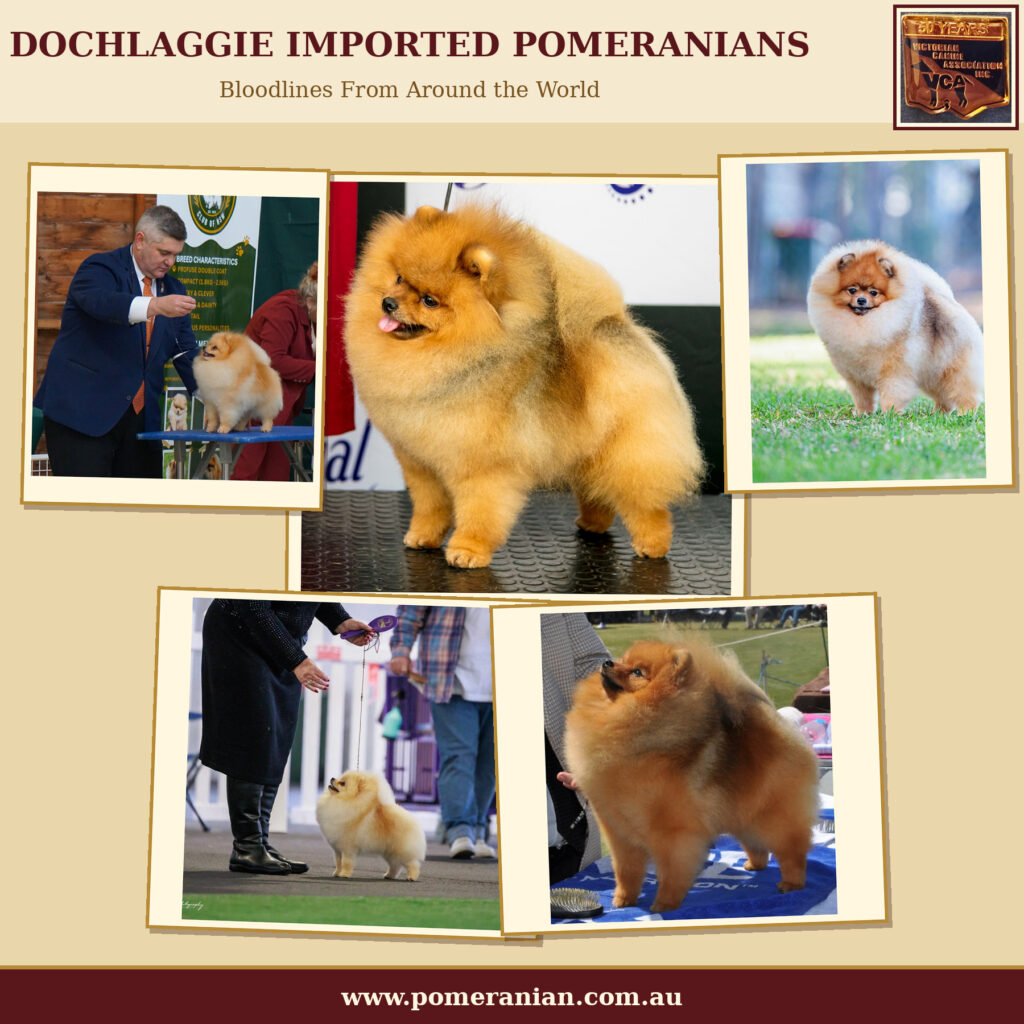
Introducing International Bloodlines
Carefully selected imported bloodlines have played an important role at Dochlaggie.
Over the years, Denise has owned 33 imported Pomeranians.
Each import required extensive pedigree research. It also required trust and communication between breeders.
Importing a dog involves much more than choosing an attractive photograph. The dog’s pedigree must complement the breeding program.
The dog should also offer qualities that remain difficult to find in the bloodlines already available.
Show titles alone cannot measure an import’s value. Its true contribution appears in its descendants.
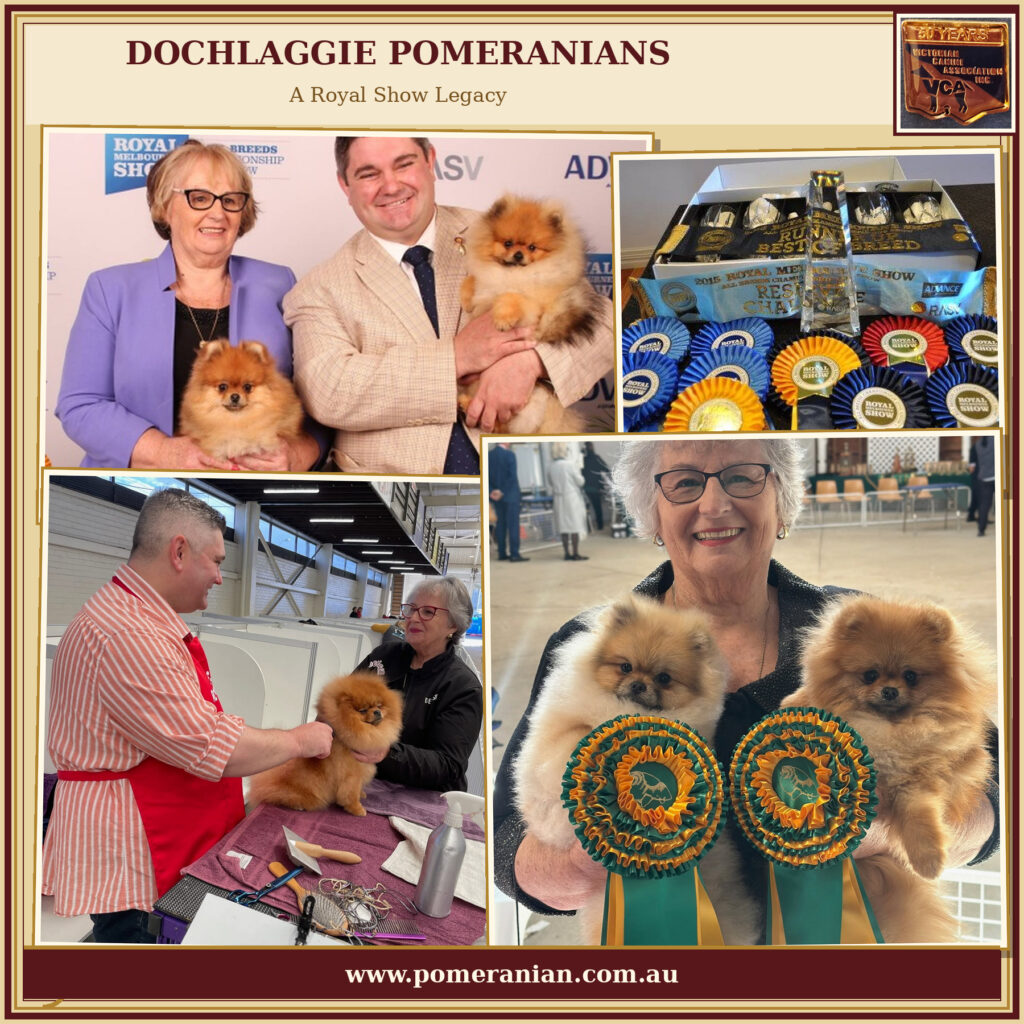
Among the more recent imports to contribute to Dochlaggie are Multi Champion Tauro Kennel JP Atlantis and Multi Champion Tauro Kennel JP Amor.
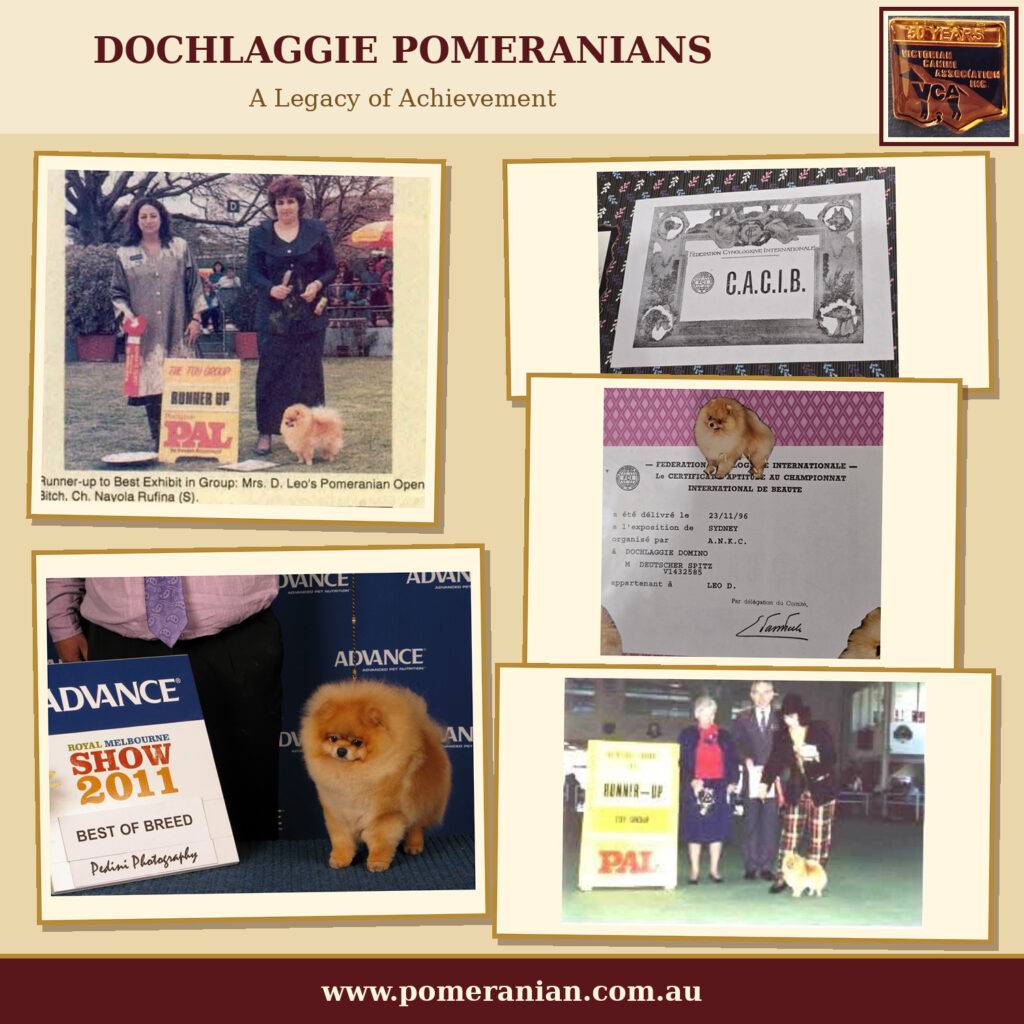
Amor arrived in Australia with an impressive collection of international titles. He later gained his Australian Championship in style, winning Runner-Up Best Exhibit in Group and Best Open in Group.
These achievements brought great excitement. However, an import’s most important contribution may take several generations to assess.
The greatest success occurs when the qualities of an imported dog combine with an established Dochlaggie female family and continue through later generations.
The Importance of the Female Line
A successful breeding program rarely rests on one outstanding male.
Strong female families create consistency. They form the foundation of a long-term breeding program.
Dochlaggie has developed generations of related females. Their qualities remain recognisable in their descendants.
These mothers, daughters and granddaughters have carried the Dochlaggie type forward.
Successful males often receive more public attention because they can sire many puppies. However, breeders should never underestimate the brood bitch.
She contributes much more than her name on one half of the pedigree suggests. She carries, delivers and raises the litter.
Her temperament and maternal ability influence the puppies during their earliest weeks.
Some of the most valuable females in a breeding program may never become widely known. Their influence may still continue for generations.
A strong female family provides the foundation. Carefully selected Australian and imported males can then build upon it.
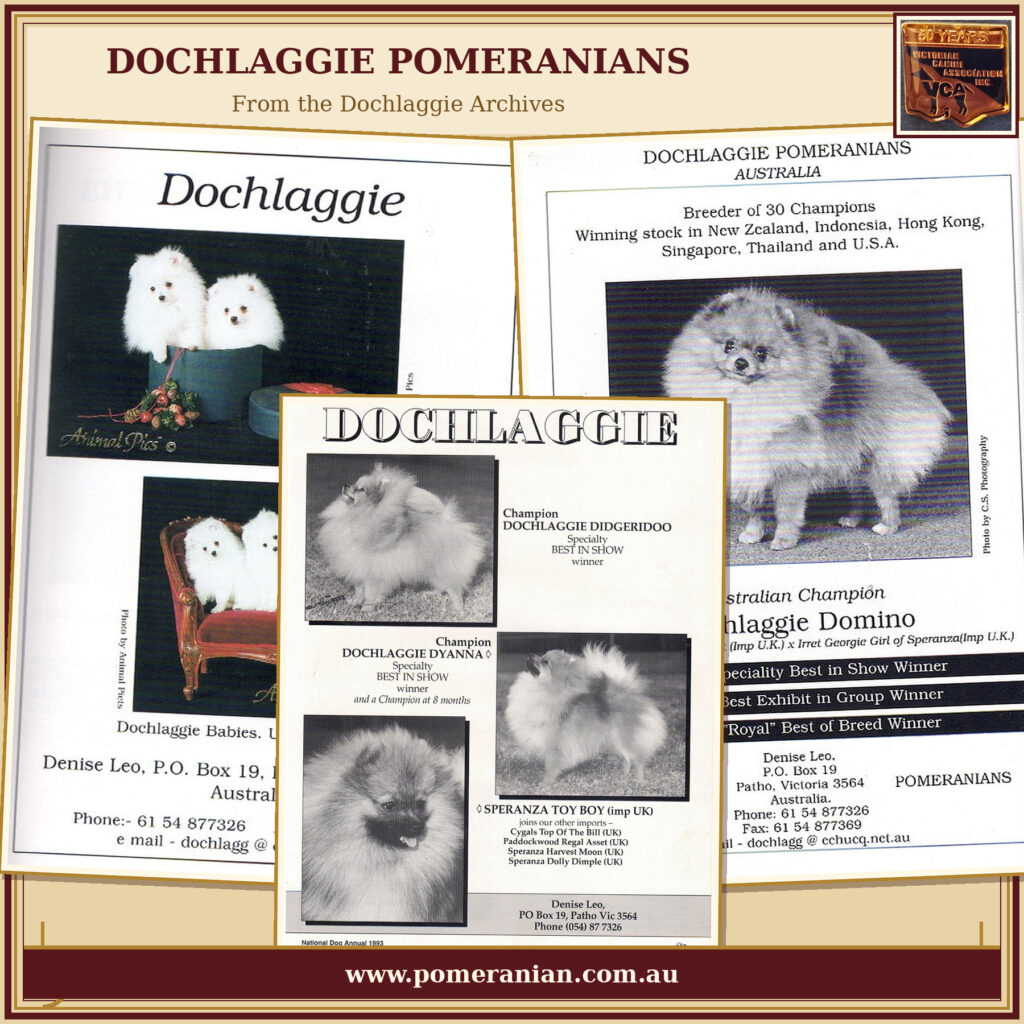
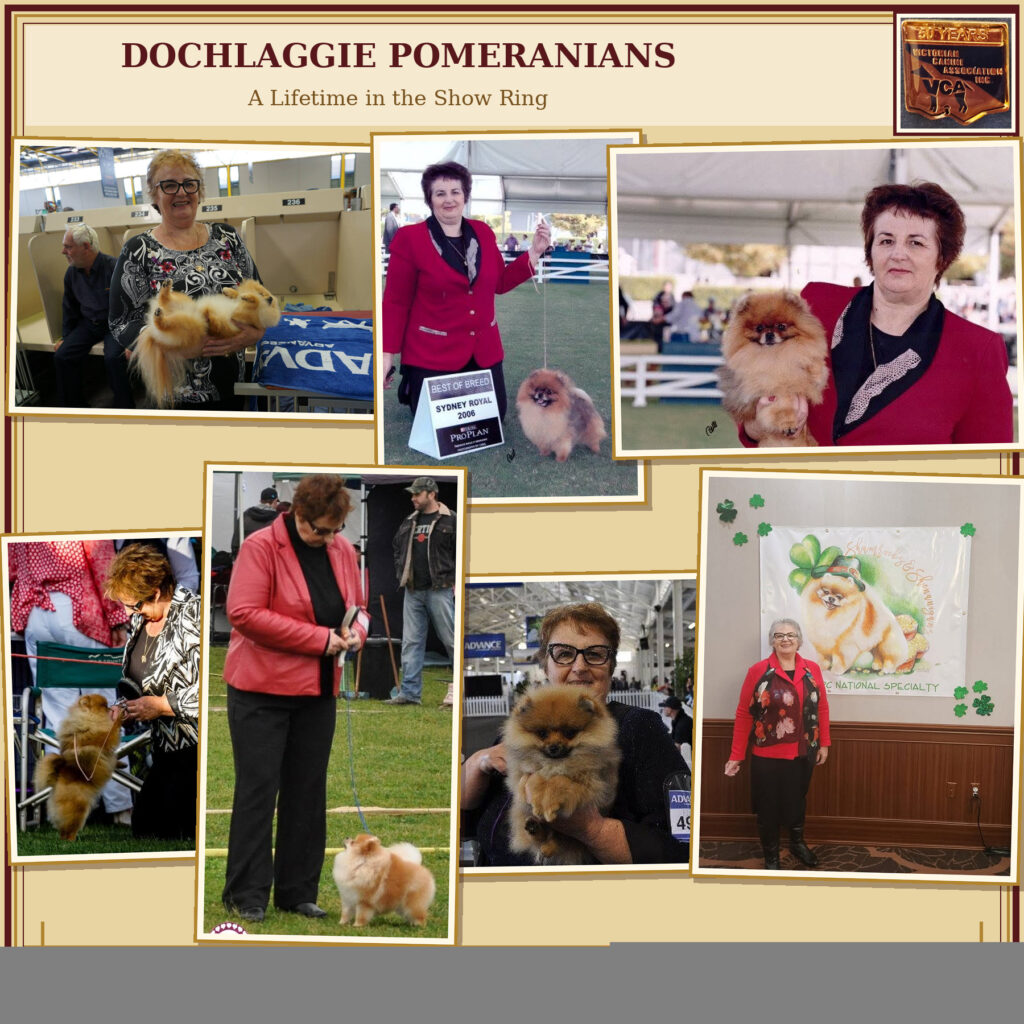
From My First Best in Show Winner to More Than 100 Champions
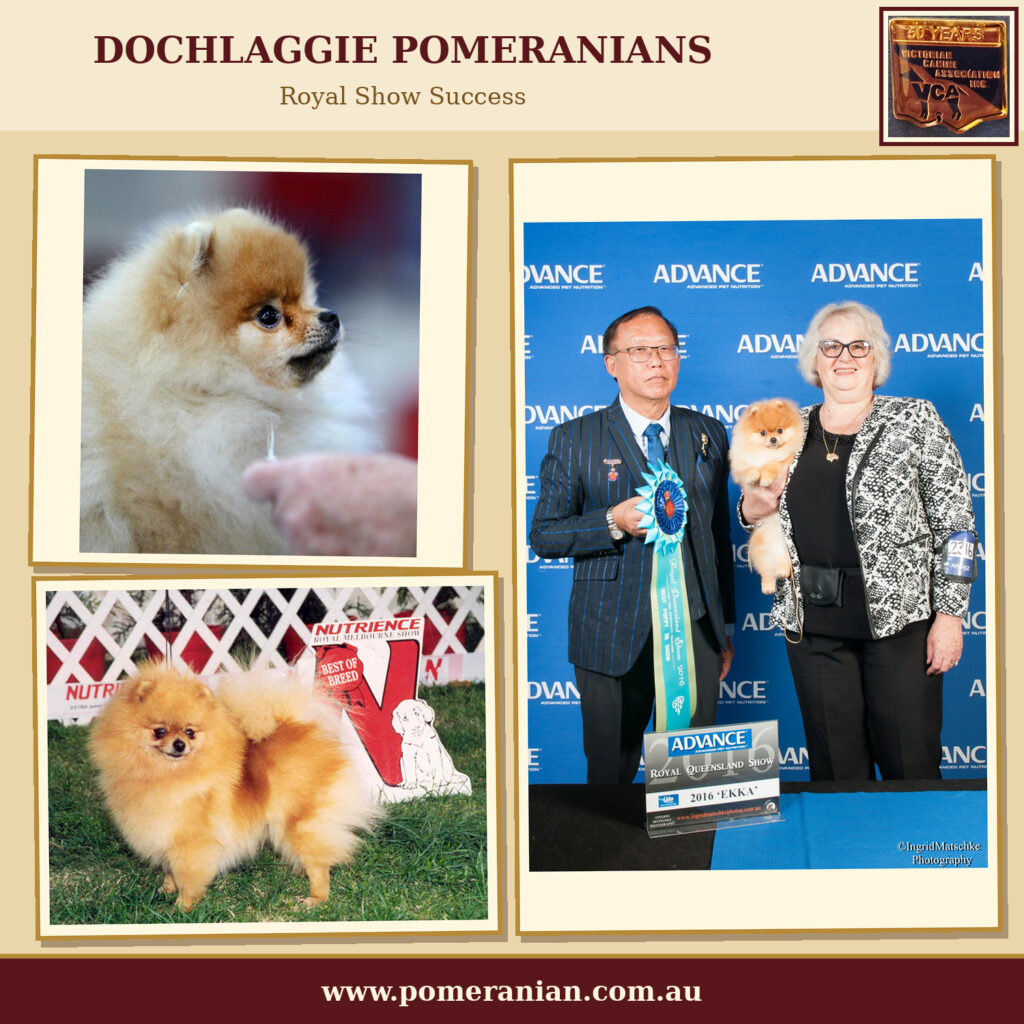
Champion Dochlaggie Decisive was born in 1977, only two years after Denise established the Dochlaggie prefix.
In 1978, he won All-Breeds Best in Show at a championship show. He became Denise’s first Best in Show-winning champion.
That early success began a show record that has continued for more than five decades.
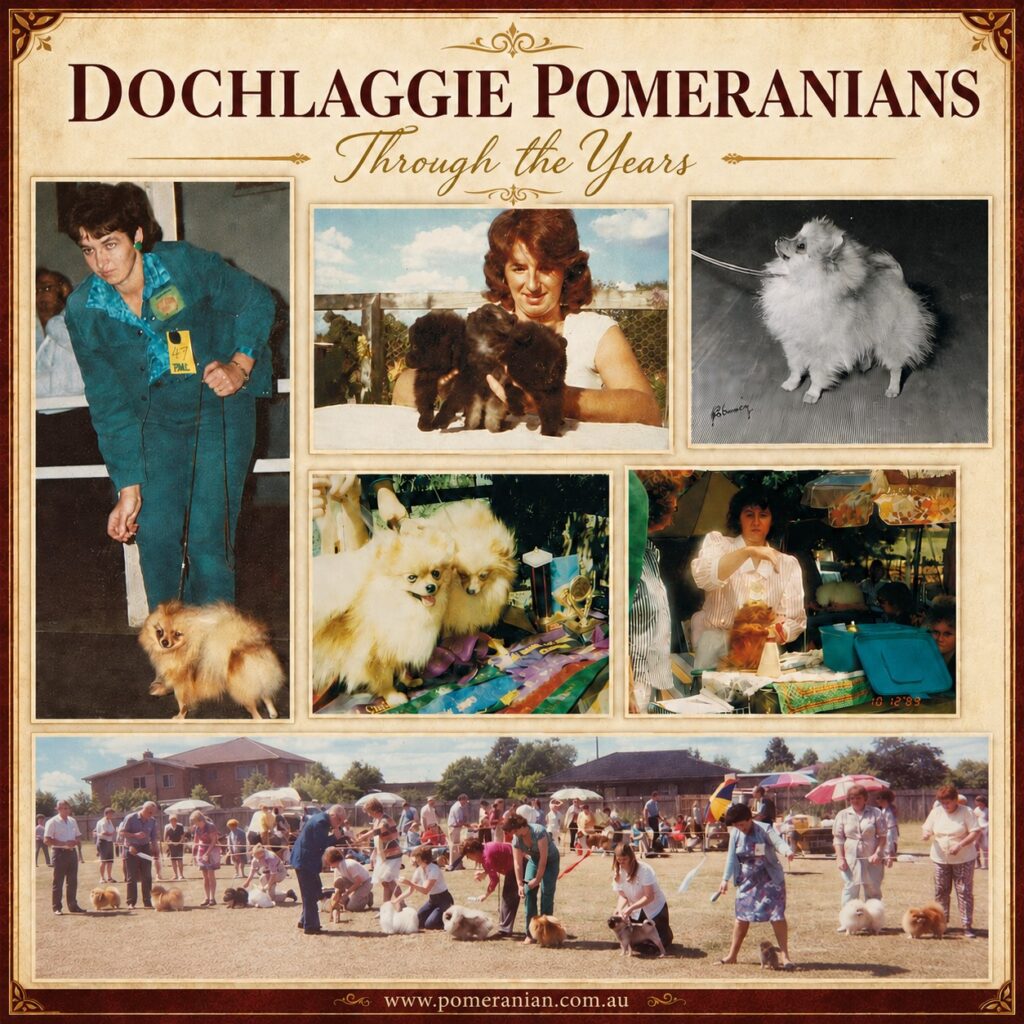
During that time, Denise has bred, owned and exhibited more than 100 champions.
She did not breed every one of these dogs. Some came from respected breeders in Australia and overseas.
Each outside dog needed to complement the established bloodlines and contribute to the future of Dochlaggie.
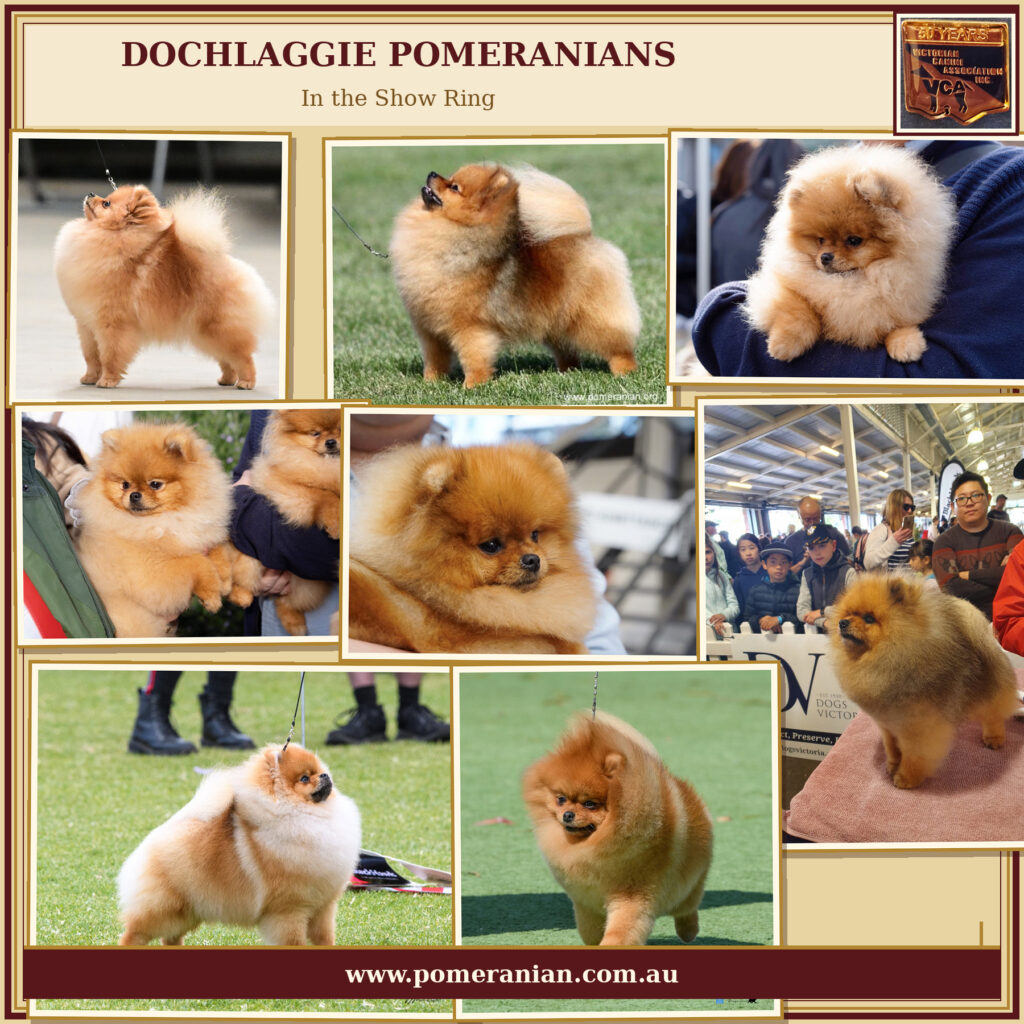
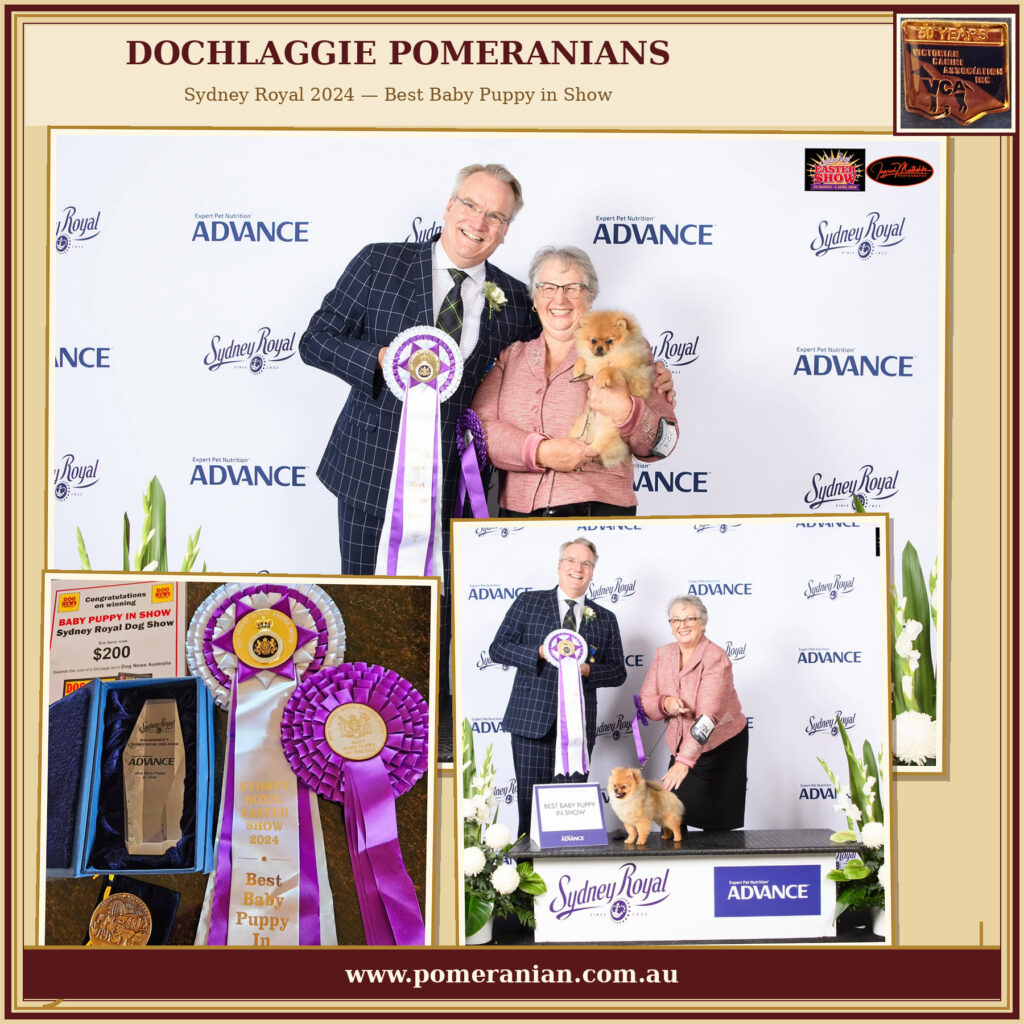
Dochlaggie Pomeranians have included Royal Show winners, Best in Show winners and Best in Group winners. They have also won Runner-Up Best in Group and numerous class-in-group awards.
Every major award brings excitement, but titles do not tell the entire story.
Some wins confirm the success of a new generation. Others show that a carefully planned breeding produced the desired qualities.
Behind every important winner stand generations of selective breeding and years of pedigree research.
Winning is never guaranteed. Dog showing requires preparation, grooming, travel and expense.
It also requires the ability to accept the judge’s decision on the day. A breeder must learn from victories and disappointments.
Denise remains naturally competitive and always wants the dogs presented at their best.
Showing also allows breeders to compare their dogs with others. It gives judges an opportunity to assess the results of their breeding decisions.
Dochlaggie Around the World
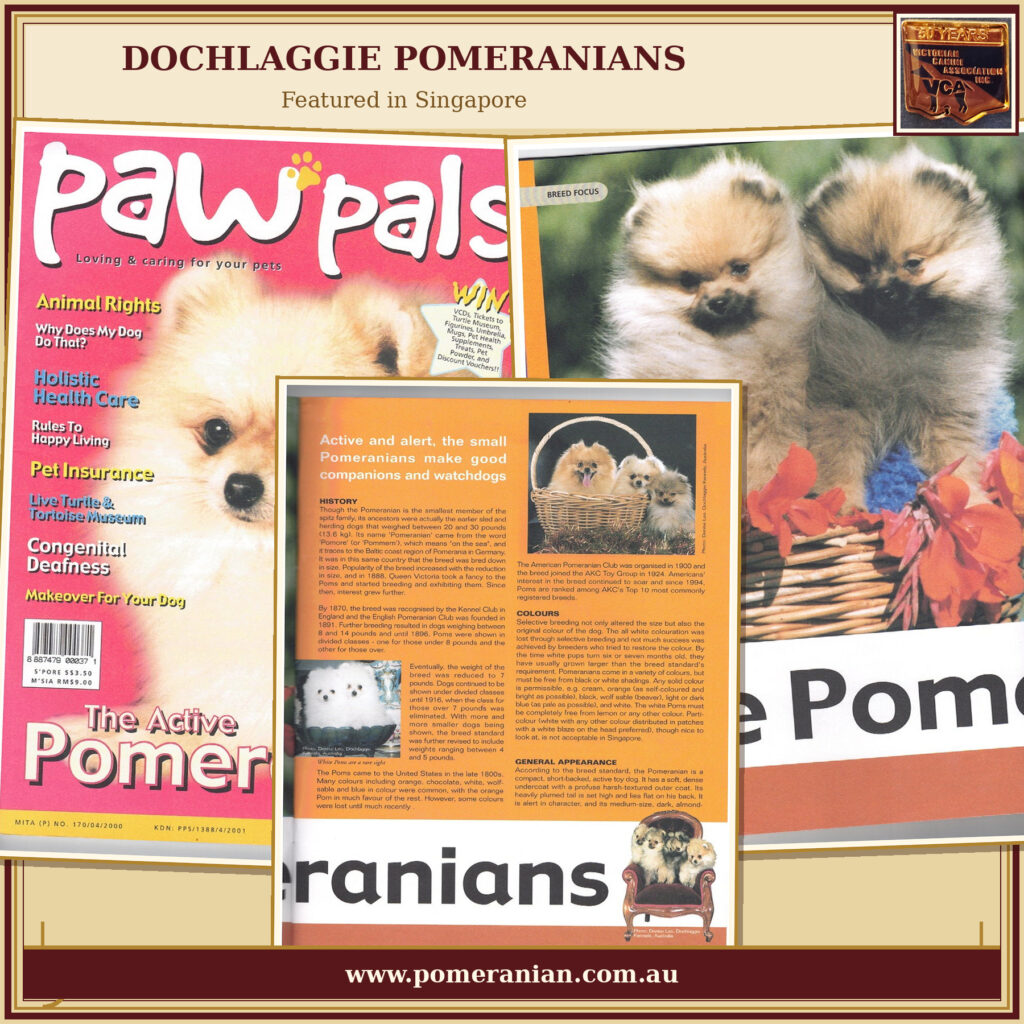
Dochlaggie Pomeranians have succeeded well beyond Australia. Dogs carrying Dochlaggie breeding have travelled to many countries. They have contributed to breeding and exhibition programs around the world.
These countries include the United States, Germany, Japan, Hong Kong, New Zealand and Singapore.
Dochlaggie dogs and bloodlines have also reached Indonesia, Malaysia, Norway, Finland, France, India and Italy.
Other destinations include Switzerland, Bulgaria, Bahrain, Thailand, Russia, Tahiti, New Caledonia, Vanuatu and the Seychelles.
Seeing an Australian-bred dog succeed in another country brings enormous satisfaction.
These dogs allow Australian bloodlines to contribute to the international Pomeranian community.
International connections also gave Denise opportunities to study different breeding traditions. Every country may develop its own preferences, but the official breed standard must remain the foundation.
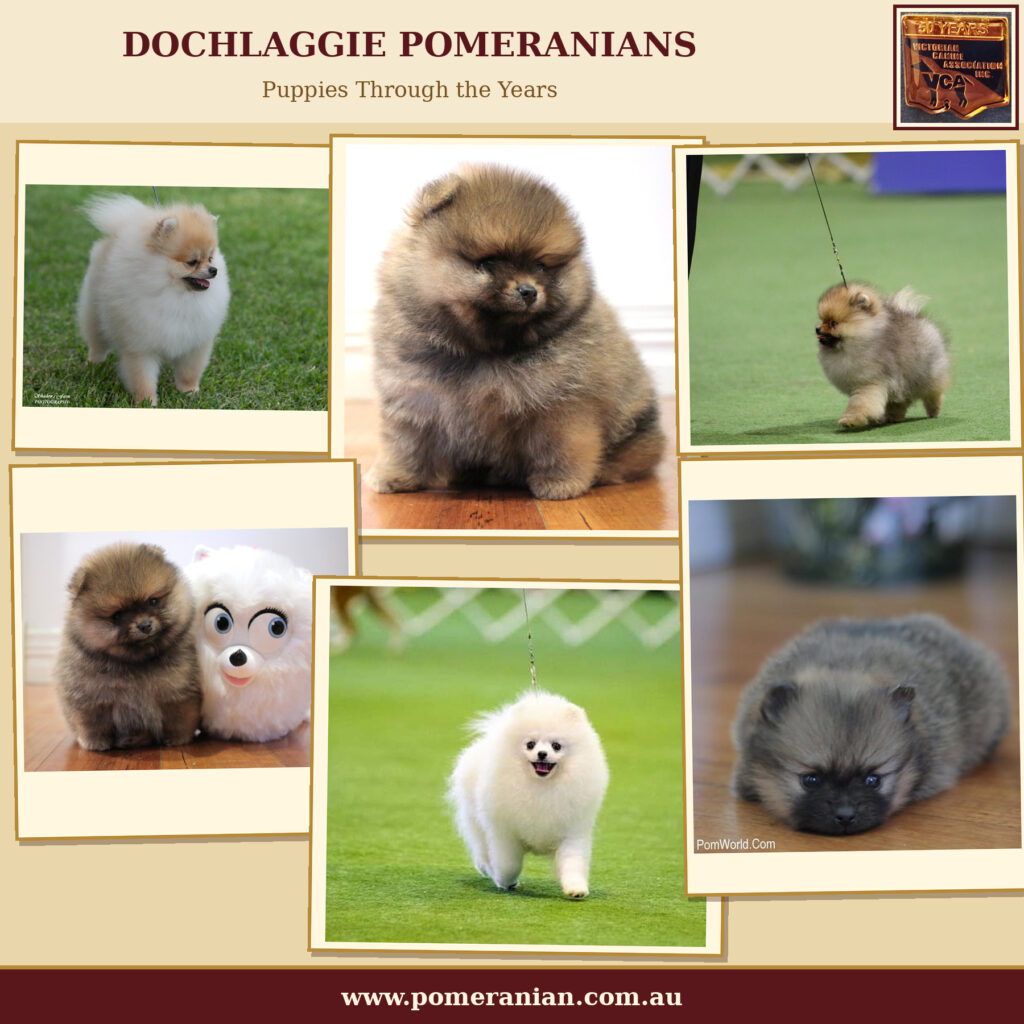
Raising Dochlaggie Puppies
A puppy’s development begins long before it leaves for its new home.
Dochlaggie raises puppies with close attention to health, temperament, grooming and socialisation.
The puppies become accustomed to human handling from an early age. Gradual introductions prepare them for the experiences they will encounter in family life.
Grooming education also begins early. Pomeranians require regular coat care throughout their lives.
A puppy that accepts brushing, bathing, nail care and drying will be easier for its future owner to manage.
Puppies placed as family companions receive Dogs Victoria Limited Registration. This registration provides an official record of the puppy’s identity and pedigree.
It also confirms that the dog will live as a companion rather than enter a breeding or exhibition program.
Dochlaggie takes the suitability of each home seriously. A puppy is not a product to sell to the first person who asks the price.
Every puppy has its own personality and individual needs. The right placement should suit both the puppy and its future family.
A championship title represents a wonderful achievement. However, a healthy and loving Pomeranian that becomes an irreplaceable member of a family also represents successful breeding.
Changes in Health and Breeding Knowledge
Knowledge of canine health and reproduction has changed dramatically since Denise began breeding.
Conditions that breeders now discuss widely once remained poorly understood.
Black Skin Disease, also known as Alopecia X, was practically unheard of among the breeders Denise knew.
A friend once bred a dog that lost its coat. Nobody understood the cause at the time.
The breeder made the responsible decision not to breed from the affected dog.
Breeders now have access to DNA parentage testing, health screening and modern reproductive technology. Veterinary treatments have also advanced considerably.
Few breeders could have imagined many of these developments in 1975.
These tools provide valuable information, but breeders must use them alongside traditional knowledge and experience.
A laboratory result cannot assess breed type, movement or temperament. Nor can it determine the overall quality of a dog.
Science gives breeders better tools. It does not replace experience, observation and sound judgement. Responsible breeding requires both.
Starting Pomeranian Picnics and Meet-Ups in Australia
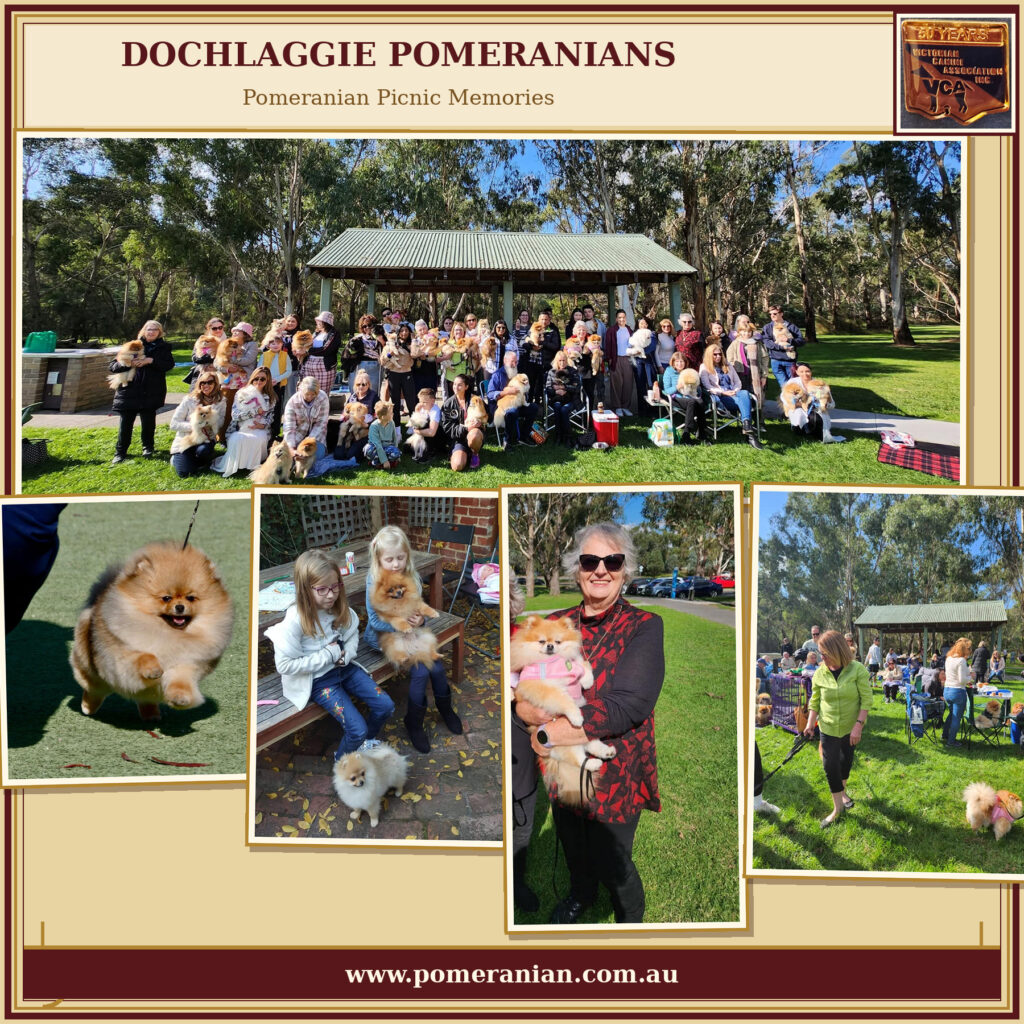
Denise’s desire to promote Pomeranians extended beyond breeding and showing.
She started Pomeranian meet-ups and picnics in Australia. These events gave owners an opportunity to meet and celebrate the breed in a relaxed environment.
At the time, ordinary Pomeranian owners had few opportunities to join breed activities. Most events centred on dog shows or specialist breed clubs.
The picnics offered something different. They welcomed Pomeranians of all ages, colours and backgrounds. They also welcomed the people who loved them.
Owners could exchange stories, form friendships and enjoy a day surrounded by Pomeranians.
The picnics also gave people opportunities to learn about temperament, grooming, health and responsible ownership.
Many owners share their lives with beloved companions rather than show dogs. The picnics allowed every much-loved Pomeranian to take part.
Denise remains proud to have started this tradition in Australia.
The purpose remains simple: bringing people together through their shared love of the Pomeranian.
Appearing on The Real Housewives of Melbourne
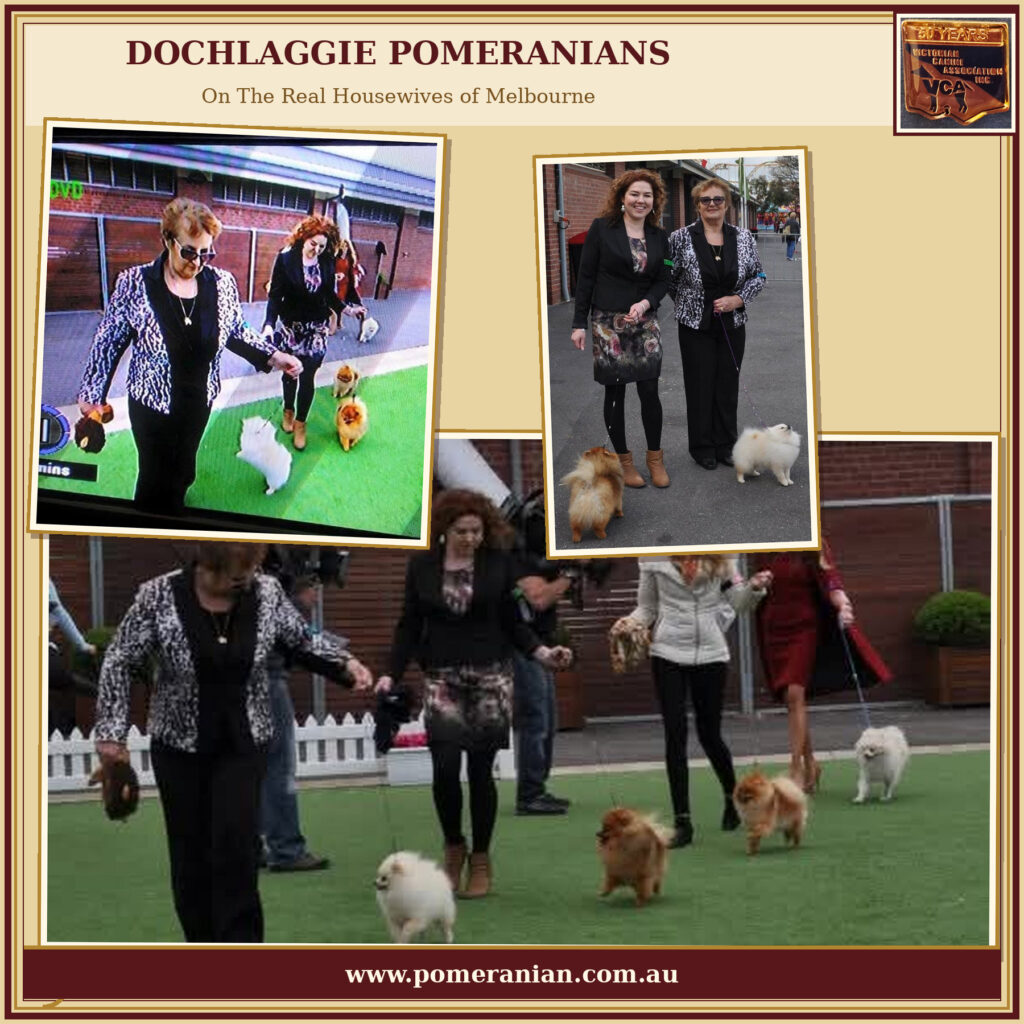
Another memorable chapter in the Dochlaggie story involved an appearance on The Real Housewives of Melbourne.
Denise and her Pomeranians appeared together on the program. The episode introduced Dochlaggie to a much wider television audience.
Many viewers would never attend a championship dog show or specialist breed event. Television gave them an opportunity to see the beauty, personality and appeal of well-bred Pomeranians.
The dogs did what Pomeranians do so well. Their glamorous appearance attracted attention, while their intelligence and confident personalities won people over.
The appearance brought publicity to Dochlaggie. It also promoted greater interest in the Pomeranian breed.
It remains an enjoyable and memorable part of the Dochlaggie story.
Volunteering for Dog Clubs
Denise has devoted a considerable amount of time to all-breeds kennel clubs and specialist Pomeranian clubs.
She served as secretary of the Echuca Kennel Club for 15 years. The club later honoured her with life membership.
During those years, she helped organise and run successful championship shows. The public usually sees only what happens in the show ring. It does not always see the work required to make the event possible.
Clubs must select and invite judges. They must prepare schedules, process entries and produce catalogues. Volunteers must also organise grounds, equipment, officials and prizes. A successful show requires careful planning and cooperation. It also requires many hours of voluntary work.
Fifteen years as secretary gave Denise extensive experience in club administration. She took great satisfaction in helping the club run successful and well-organised shows.
Denise also served as president of Victoria’s second Pomeranian club. For many years, she worked as the club’s publicity officer and produced a quality newsletter for its members.
Before websites and social media, newsletters provided an important link between club members.
The newsletter shared club news, show results, upcoming events and educational material. Producing it required research, writing, photographs and careful presentation.
Dog clubs depend upon volunteers. Shows, newsletters, meetings and educational activities only happen because people give their time and skills.
Club service gave Denise another way to contribute to the dog community that has played such an important role in her life.
From Practical Experience to an ANKC Judge’s Badge
Denise’s judging journey began when others recognised the practical knowledge she had gained over many years.
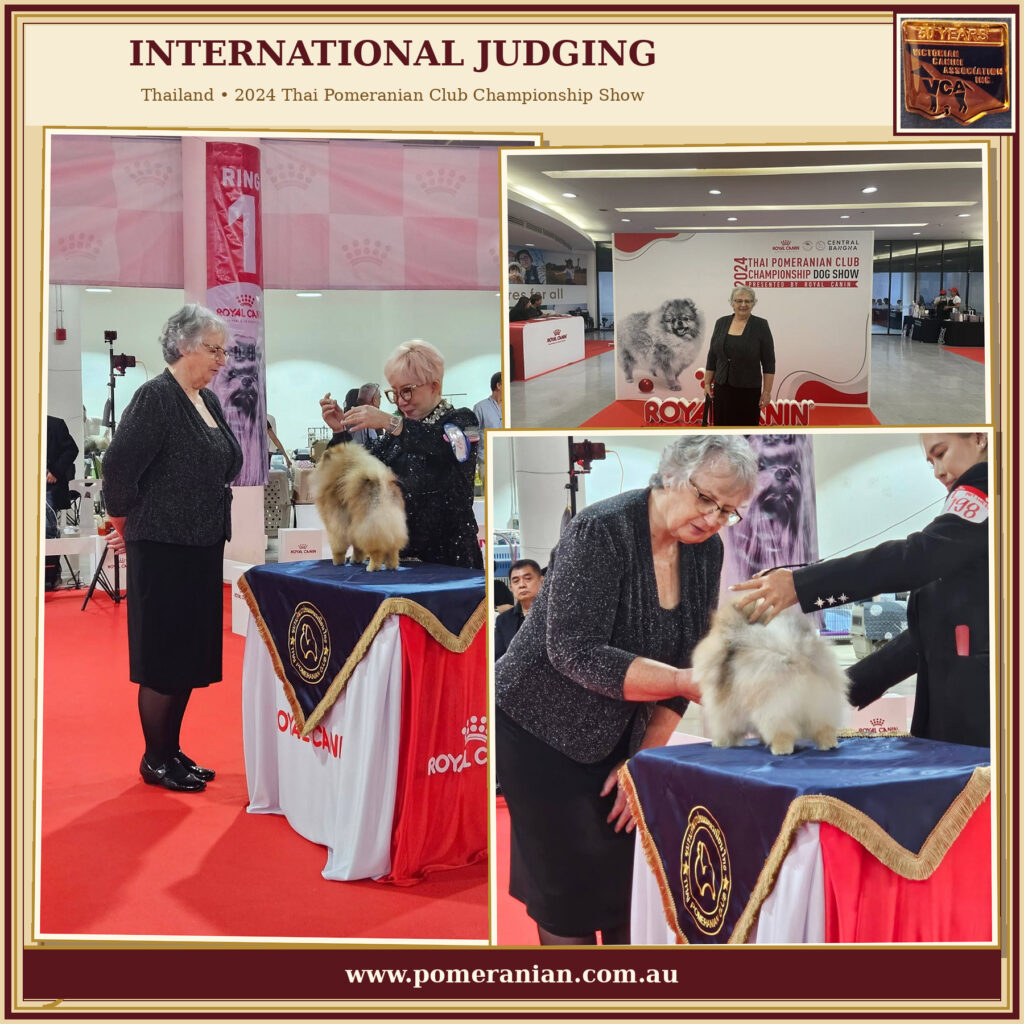
The Scottish Pomeranian Club invited her to judge the breed. She later received an invitation to judge at the Thailand Pomeranian Grand Sweepstakes. Both appointments brought a great sense of honour and gratitude.
These appointments did not require an official judge’s licence. The clubs selected Denise because of her practical experience, knowledge and long involvement with Pomeranians.
The international appointments encouraged her to take the next step and join the judges training scheme in Victoria. Denise studied for and passed the entrance examination. She then progressed through the formal training scheme.
Practical breeding experience provided a strong foundation. Formal training expanded her knowledge of breed standards, anatomy, construction, movement, terminology and judging procedures.
Many people supported Denise during this process. She remains grateful to everyone who offered guidance, encouragement and knowledge. Today, she proudly holds an ANKC judge’s badge.
The badge represents much more than passing an examination. It also represents decades of breeding, exhibiting, travelling, researching and studying the Pomeranian. Judging carries great responsibility. A judge must assess every exhibit against the breed standard.
Breed type, construction, movement, coat, expression and temperament all matter. Experience as a breeder helps a judge appreciate the work behind every exhibit. However, the judge must assess only the dogs presented on that day.
The best Pomeranian should not win simply because it has the largest coat or the prettiest face.
The ideal exhibit must combine correct construction and free, buoyant movement with unmistakable Pomeranian breed type.
The overseas appointments gave Denise the confidence to enter the Victorian judges training scheme. They ultimately led to the ANKC judge’s badge of which she remains so proud.
Sharing Knowledge Through Writing
Denise’s commitment to Pomeranians extends beyond breeding, exhibiting and judging.
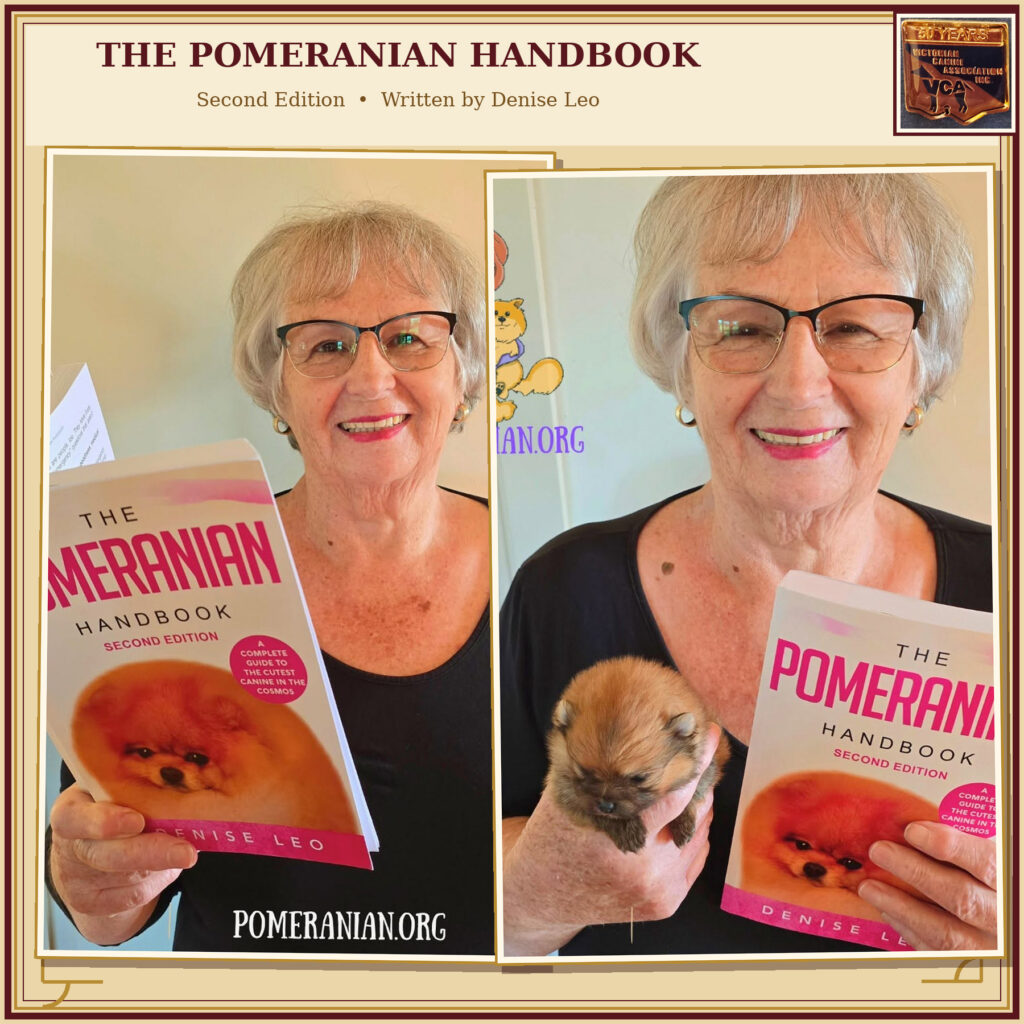
She wrote The Pomeranian Handbook and Pomeranian Grooming. She also founded Pomeranian Headquarters and Pomeranians Australia.
These websites share reliable information with Pomeranian owners throughout the world.
The internet contains a vast amount of information about dogs, but not all of it is accurate.
People frequently copy advice from one website to another without checking it. Marketing claims can quickly become accepted as facts.
Denise’s articles draw on more than five decades of practical experience. They also incorporate historical research, official breed standards and current veterinary information.
Preserving Pomeranian history remains especially important.
Much of the breed’s early history lies scattered through old books, newspapers, catalogues and show records.
Valuable knowledge may disappear unless someone collects, preserves and explains those records.
Continuing the Dochlaggie Story
Dochlaggie began in a very different era, but its purpose has not changed.
Bloodlines, breeding tools and show presentation continue to evolve. The goal remains the same.
Dochlaggie aims to breed healthy, sound and beautiful Pomeranians that remain unmistakably true to the breed standard.
Recent generations include Dochlaggie Dream of Me, known as Pixie, and Dochlaggie Doing It, known as Butters.
They represent the continuation of work that began in 1975.
Pixie has already received major recognition. Her awards include Best Exhibit in Group and multiple Best Puppy in Group wins.
These achievements carry special meaning because Pixie is a home-bred Dochlaggie girl. She represents generations of planning, experience and careful selection.
Each generation carries something from the dogs that came before it.
A familiar expression, outline, movement or personality may reappear many years later in a descendant. This remains one of the most fascinating aspects of breeding.
The Family Behind Dochlaggie
The Dochlaggie story could not have developed without the love, patience and support of Denise’s family.
Her late husband, Noel, played an important role in making her life with Pomeranians possible.
A successful breeding and exhibition program affects the entire household. It involves early mornings, long journeys, puppy vigils and unexpected problems.
The needs of the dogs often determine family plans.
Noel supported Denise’s passion and helped Dochlaggie grow. His contribution and the life they shared will always remain an important part of the Dochlaggie story.
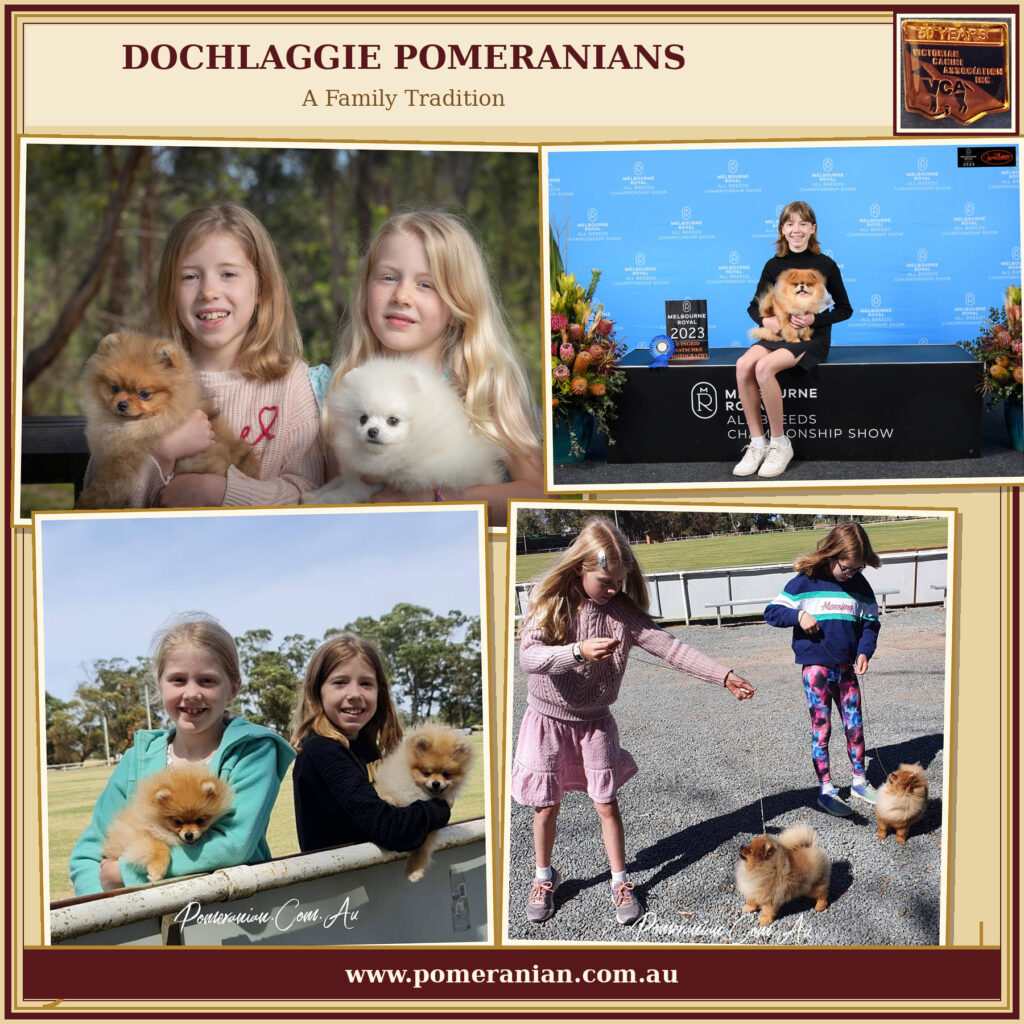
Denise’s four children and her grandchildren have also shared the journey.
They have lived with her commitment to the dogs. They have shared the challenges, sacrifices and many happy moments.
Their patience and understanding helped make more than 50 years of Dochlaggie Pomeranians possible.
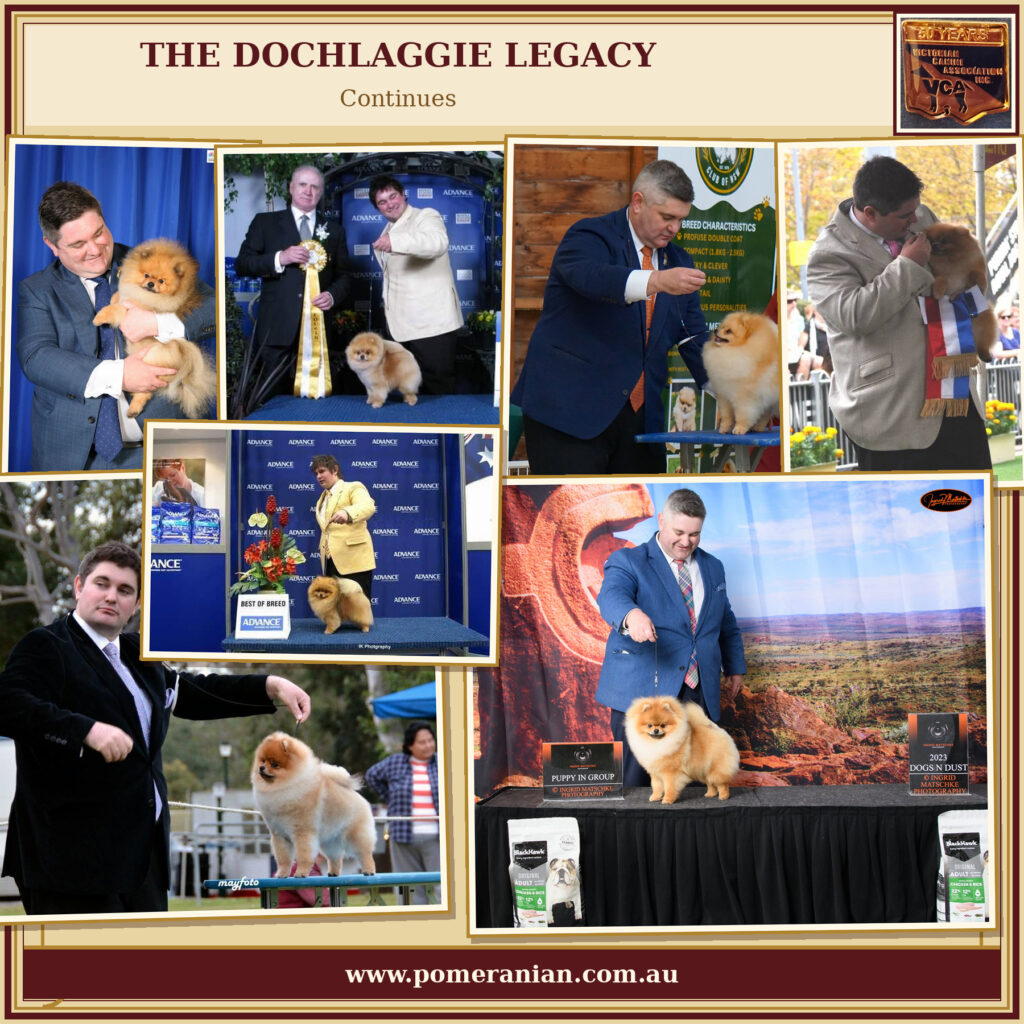
Last, but certainly not least, Denise acknowledges her “dog-show son,” Jarrod Tyler.
Jarrod has played an enormous role in the Dochlaggie story. He is far more than someone who has presented the dogs in the show ring.
He has become an important member of Denise’s family.
Jarrod has presented Dochlaggie Pomeranians to perfection. His contribution, however, extends far beyond show presentation. He has shared the planning, decisions, successes and disappointments.
Jarrod also serves as Denise’s trusted sounding board. She values his honest opinion whenever she wants to discuss a new idea or plan.
He understands what Dochlaggie represents. He also understands the standards that Denise has worked to maintain for more than five decades. That trust extends to the future. Denise has entrusted the continuation of Dochlaggie Pomeranians to Jarrod in her will.
Knowing that the Dochlaggie name, dogs and bloodlines will pass into the care of someone who understands their importance brings great comfort.
The achievements associated with Dochlaggie do not belong to one person alone. They also belong to the people who offered their support and believed in the vision behind the kennel.
Noel, Denise’s children, her grandchildren and Jarrod have all contributed to the history, present and future of Dochlaggie Pomeranians.
More Than a Kennel Name
Dochlaggie represents far more than a registered prefix.
The name stands for more than 50 years of learning, perseverance, responsibility and love for the Pomeranian breed.
It represents the dogs that became champions and the breeding dogs whose influence continues through their descendants.
It also represents the cherished companions who transformed the lives of their owners.
The Dochlaggie journey has brought wonderful successes. It has also brought disappointments, sleepless nights and difficult decisions.
Responsible breeding demands resilience. It requires a willingness to place the welfare of the dogs ahead of convenience, profit or personal ambition.
The champions, Royal Show winners, Best in Show winners and Best in Group winners form an important part of the record.
The international influence of Dochlaggie bloodlines provides another source of pride.
However, a family who describes their Dochlaggie Pomeranian as healthy, loving and irreplaceable provides an equally important measure of success.
A Legacy Still Being Written
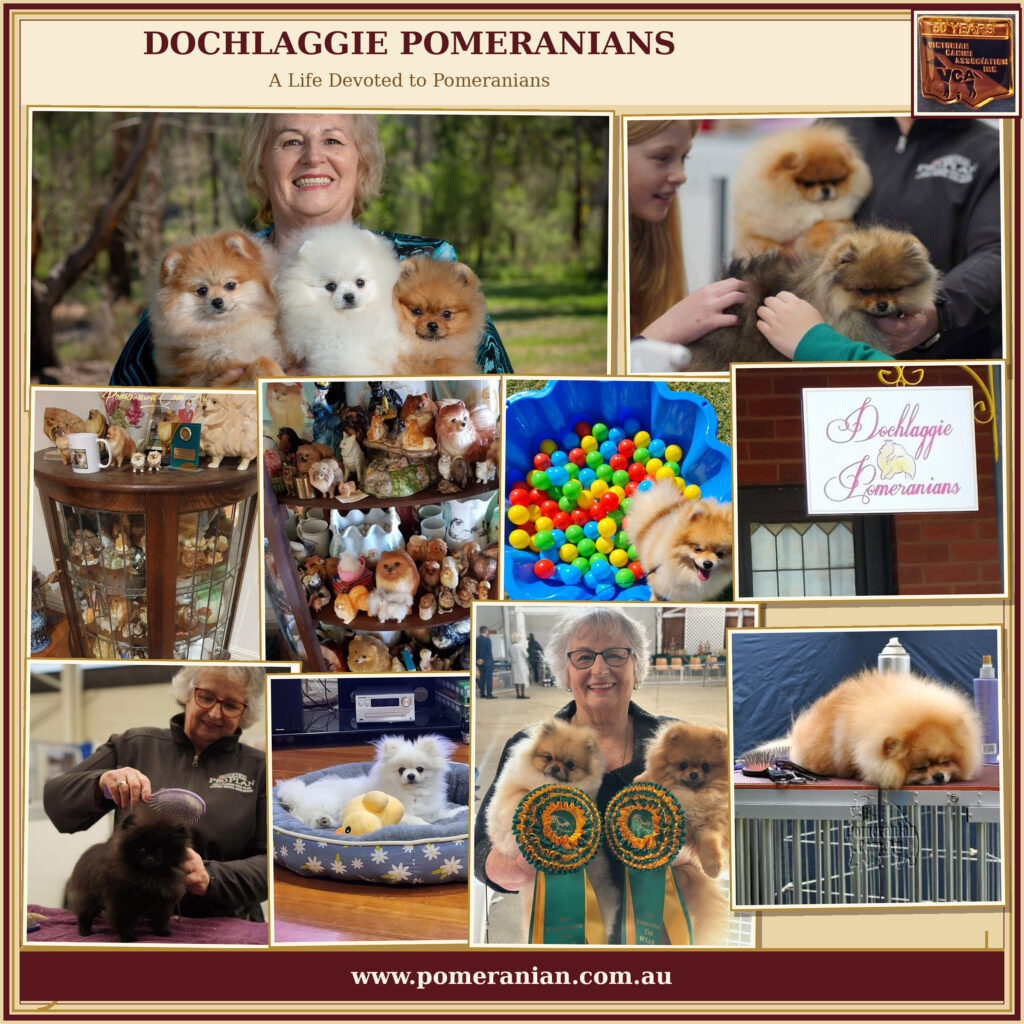
The official history of Dochlaggie Pomeranians began in 1975, but the story is not finished.
More than 50 years later, the breed continues to fascinate Denise.
There is always another pedigree to study, another generation to plan and another puppy to evaluate. There is also more Pomeranian history to research and preserve.
The Dochlaggie name will continue to represent knowledgeable and responsible preservation breeding.
Dochlaggie Pomeranians will be bred with care, raised with love and valued for far more than their beauty.
Titles and show awards form an important part of the record. However, the dogs themselves form the true Dochlaggie legacy. That legacy lives in their health, character and quality. It also lives in the happiness they have brought to people throughout Australia and around the world.
Pomeranians have shaped almost every part of Denise Leo’s life. She has been fortunate to breed them, exhibit them, judge them, write about them and share her home with them.
After more than half a century, her devotion to this extraordinary little breed remains as strong as ever.
Denise Leo
Dochlaggie Pomeranians
Preservation-Bred Pomeranians Since 1975
